
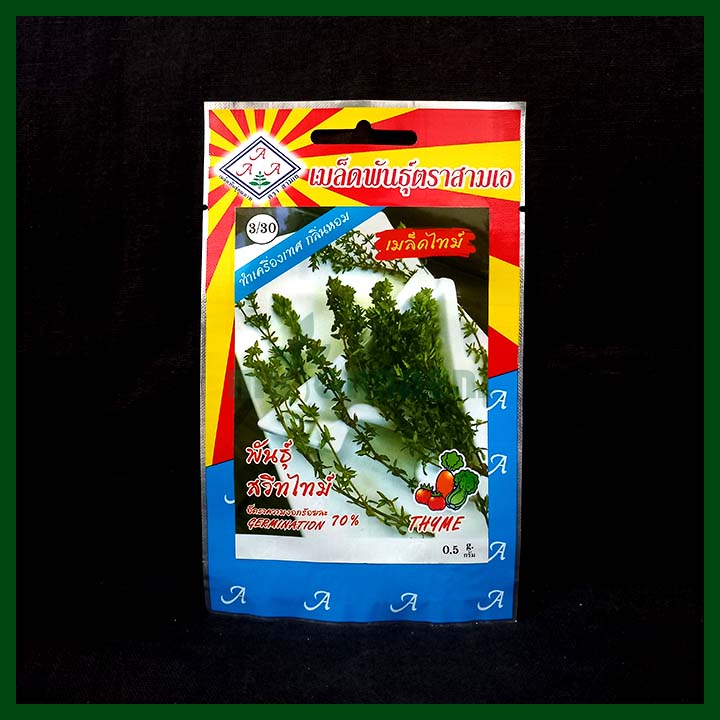

Thyme – 0.5 gram seeds – AAA – Thai
Original price was: ৳ 280.00.৳ 180.00Current price is: ৳ 180.00.
Available on backorder
Description
Thyme
Price: 180 Taka per packet (sale price)
Number of seeds: 1500 (apprx.) (0.5 gram seeds)
Brand: Chua Yong Seng Seed Co. Ltd (AAA)
Country of origin: Thailand
Germination Rate: 70%
Germination Temperature: Thyme seeds germinate best at a soil temperature range of 15–21°C (60–70°F). Optimal germination occurs around 21°C (70°F), ensuring healthy seedling growth. Some sources suggest a slightly lower minimum of 13°C (55°F) for germination, but higher temperatures within the range improve success rates.
Germination Time: Thyme seeds typically take 14–28 days to germinate under optimal conditions. Germination can occasionally extend to 30 days or even 1–12 weeks in less ideal conditions, such as lower temperatures or inconsistent moisture. Patience is key due to thyme’s slow and sometimes uneven germination.
Plant Height, Span, and Seed Sowing Depth
- Plant Height: Thyme varieties vary, but most reach 6–12 inches (15–30 cm) tall. Creeping thyme is lower, at 2–4 inches (5–10 cm).
- Span: Thyme spreads 12–24 inches (30–60 cm) wide, depending on the variety. Creeping thyme can spread up to 20–30 cm across.
Seed Sowing Depth: Sow seeds ¼ inch (3–6 mm) deep or sprinkle on the soil surface with a light covering of soil or vermiculite, as they require light for germination.
Plant Spacing: Space thyme plants 6–12 inches (15–30 cm) apart for small gardens or containers. For field production, space 12–24 inches (30–60 cm) apart to allow for vigorous spreading. Creeping thyme used as ground cover may require closer spacing, around 6–9 inches (15–23 cm), for denser coverage.
Row Spacing: Spacing should be 12–24 inches (30–60 cm), with 16–18 inches (40–45 cm) being common for garden rows to accommodate thyme’s spreading habit. For field production, rows can be spaced 3 feet (90 cm) apart.
Trellis or Any Type of Physical Support Requirement: Thyme does not require trellis or physical support. Its low-growing, spreading habit (especially for creeping varieties) or upright woody stems (for culinary varieties) make it self-supporting. In containers, ensure the pot is stable to prevent tipping due to top-heavy growth.
Seed to Harvest Time: Thyme takes 75–90 days (2.5–3 months) from seed to first harvest for light picking of leaves. Full maturity may take 6–8 weeks for initial harvesting, but some varieties require up to 200 days (6.5 months) to reach full maturity. Harvesting is typically light in the first year.
Seed to Bloom Time: Thyme blooms in 3–4 months (90–120 days) from seed sowing, typically in late spring to summer. Blooming lasts about 3–4 weeks, with tiny pink, lavender, or white flowers appearing. Regular pruning can delay blooming to encourage leaf production.
Pot Size/Container Size/Bed Size (in Inches)
- Pot Size: Use a pot at least 6 inches (15 cm) deep and 8–12 inches (20–30 cm) wide for one plant. For multiple plants, choose a container 12–18 inches (30–45 cm) wide.
- Bed Size: In garden beds, allocate 12–24 inches (30–60 cm) per plant for spacing, with no specific bed size limit as long as drainage is adequate.
- Container Recommendation: Terra-cotta or clay pots are preferred for their moisture-wicking properties. Ensure ample drainage holes.
Soil Type (in Detail) and Ideal pH Level
- Soil Type: Thyme thrives in well-draining, sandy, or loamy soil with low fertility. It prefers dry, rocky, or gravelly soils over heavy, clay-rich, or waterlogged soils. Incorporate sand, perlite, or grit to improve drainage. Avoid overly rich soils, as they reduce fragrance and flavor.
- Ideal pH Level: 6.0–8.0, with a preference for neutral to slightly alkaline (pH 7.0). Add lime to acidic soils to raise pH if needed.
- Preparation: Amend with compost or organic matter before planting, but avoid over-enrichment.
Daily Sunlight Requirement (in Hours) and Light Requirement for Germination of Seeds
- Daily Sunlight: Thyme requires 6–8 hours of full sun daily for optimal growth. It tolerates partial shade but may become leggy with reduced flavor.
- Light for Germination: Seeds need light exposure to germinate, so sow them on the soil surface or cover lightly. Place seed trays in a bright location or under grow lights (12–16 hours/day).
Water Requirement (in Liters) with Watering Intervals (in Days) According to Plant’s Height or Size
- Seedlings (0–4 inches): Keep soil consistently moist but not waterlogged, using 0.1–0.2 liters per plant every 1–2 days. Mist with a spray bottle to avoid disturbing seeds.
- Young Plants (4–8 inches): Water with 0.3–0.5 liters per plant every 3–5 days, allowing the top 1 inch of soil to dry out between waterings.
- Mature Plants (>8 inches): Water with 0.5–1 liter per plant every 7–14 days, depending on climate. Thyme is drought-tolerant and prefers dry conditions. Overwatering risks root rot.
- Note: In containers, water when the top 2–3 inches of soil are dry. In Bangladesh’s humid climate, reduce frequency to prevent waterlogging.
Nutrients Essential for Healthy Growth and Organic Fertilizers
- Essential Nutrients:
- Nitrogen (N): 5–10% for leaf growth, but excess reduces flavor.
- Phosphorus (P): 10–15% for root and flower development.
- Potassium (K): 10–15% for overall vigor and drought resistance.
- Micronutrients: Calcium, magnesium, and trace elements like iron and manganese.
- Organic Fertilizers:
- Vermicompost: Rich in N (1–2%), P (1.5–2%), and micronutrients.
- Cow-dung Compost: Provides N (0.5–1%), P (0.3–0.9%), and K (0.5–1.9%).
- Bone Meal: High in P (20–25%) and calcium.
- Neem Cake Powder: Supplies N (5–6%), P (1%), and K (1.5%), plus pest-repellent properties.
- Oyster Shell Powder: Source of calcium for pH adjustment.
- Epsom Salt: Provides magnesium and sulfur.
Organic Fertilizer Application for Container-Grown Thyme
For a 12-inch wide, 6-inch deep pot (as recommended above), prepare a fertilizer blend using the listed organic fertilizers. Thyme is not a heavy feeder, so apply sparingly.
Organic Fertilizer Blend for Container-Grown Thyme
Fertilizer Blend Composition (per Plant)
- Tricho-compost: 50 g (improves soil structure, provides micronutrients)
- Vermicompost: 100 g (N, P, K, and micronutrients)
- Cow-dung Compost: 100 g (balanced nutrients, improves drainage)
- Horn Meal: 20 g (slow-release N)
- Bone Meal: 30 g (P and calcium for root growth)
- Neem Cake Powder: 30 g (N, pest repellent)
- Mustard Cake Powder: 20 g (N and K)
- Oyster Shell Powder: 20 g (calcium, pH adjustment)
- Epsom Salt: 5 g (magnesium, dissolved in water)
Total Weight per Application
- 375 g per plant (mix into top 2 inches of soil)
Application Intervals
- Initial Application: Mix into potting soil at planting.
- Subsequent Applications: Apply every 3 months during the growing season (March–October in Bangladesh).
- Method: Spread evenly around the plant base, lightly work into soil, and water thoroughly.
- Note: Avoid over-fertilization, as thyme prefers low-nutrient conditions. Reduce application by half in the first year.
Storage: Store fertilizers in airtight containers in a cool, dry place to prevent moisture absorption or pest infestation.
Chemical Fertilizer Requirement and Application Rate
Thyme requires minimal chemical fertilization due to its preference for low-fertility soils. Use a low-nitrogen fertilizer like 5-10-10 (N-P-K).
- Seedlings (0–4 inches): Apply 5 g per plant of 5-10-10 fertilizer at planting, mixed into soil.
- Young Plants (4–8 inches): Apply 10 g per plant every 6 weeks during the growing season.
- Mature Plants (>8 inches): Apply 15 g per plant every 2 months, avoiding late-season application to prevent weak growth.
- Method: Dissolve in water or sprinkle around the plant base, followed by thorough watering.
Companion Plants
Thyme is an excellent companion plant due to its pest-repellent aroma. Plant near:
- Tomatoes: Deters tomato hornworms.
- Cabbage, Broccoli, Brussels Sprouts: Repels cabbage worms and moths.
- Potatoes, Eggplants: Protects against insect pests.
- Strawberries: Enhances growth and deters pests.
- Rosemary: Shares similar water and sun requirements.
Fruit Taste: Thyme does not produce edible fruits. Its flowers are edible but used mainly for garnish, with a mild, herbaceous flavor (rated 3/10 for taste, as they are subtle and not a primary culinary component).
Leaf Taste: Thyme leaves have a pungent, earthy flavor with lemony, peppery, and minty undertones. Rated 8/10 for culinary versatility, they enhance soups, stews, meats, and vegetables. Lemon thyme varieties add a citrusy twist.
Pest Types, Chemical, and Organic Control
- Pests:
- Spider Mites: Cause stippling on leaves in hot, dry conditions.
- Aphids: Suck sap, leading to curled leaves.
- Rosemary Beetles: Chew holes in leaves, affecting related herbs.
- Chemical Control:
- Spider Mites/Aphids: Use insecticidal soap or neem oil-based sprays (e.g., Safer Brand Insecticidal Soap).
- Rosemary Beetles: Apply pyrethrin-based insecticides (e.g., Bonide Pyrethrin Garden Spray).
- Organic Control:
- Spider Mites/Aphids: Spray with a mix of 1 tsp neem oil + 1 liter water weekly. Introduce ladybugs as natural predators.
- Rosemary Beetles: Hand-pick larvae and adults. Use garlic-chili spray (blend 2 garlic cloves + 1 chili + 1 liter water, strain, and spray).
Disease Types, Chemical, and Organic Cure
- Diseases:
- Root Rot: Caused by overwatering or poor drainage, leading to wilting and yellowing.
- Downy Mildew: Yellow-gray patches on leaves, especially in humid conditions.
- Chemical Cure:
- Root Rot: Apply fungicides like thiophanate-methyl (e.g., Cleary’s 3336).
- Downy Mildew: Use copper-based fungicides (e.g., Bonide Copper Fungicide).
- Organic Cure:
- Root Rot: Improve drainage and reduce watering. Remove affected plants and sterilize soil.
- Downy Mildew: Spray with milk solution (1 part milk + 9 parts water) weekly. Ensure good air circulation by spacing plants properly.
How to Identify That the Fruit is Matured and Ready to Harvest?
Thyme does not produce edible fruits. For leaves, harvest when plants are 6–8 inches tall, just before flowering for peak flavor. Snip stems in the morning when essential oils are strongest. For flowers, harvest when fully open for garnish use.
Monthly Yield (in Kilograms) for a Family of Four (Bangladeshi Cuisine)
Thyme is used sparingly in Bangladeshi cuisine, primarily as a flavoring herb in curries, soups, or marinades. A family of four requires approximately 50–100 g (0.05–0.1 kg) per month, assuming weekly use in 2–3 dishes. This accounts for fresh leaves, with dried thyme requiring even less (25–50 g). Yield depends on plant size and harvesting frequency.
Average Crop Yield: Thyme yields approximately 0.1–0.2 kg of fresh leaves per square foot annually, assuming 1–2 plants per square foot and regular harvesting. Creeping varieties may yield less due to lower leaf density. Dried thyme yields about 20–40 g per square foot.
Average Life Span: Thyme is a perennial with a lifespan of 3–6 years, but it becomes woody and less productive after 3–4 years. Regular pruning and division extend its productive life. Replace plants every 3–4 years for optimal flavor.
Nutritional Value(s)
Per 100 g of fresh thyme leaves:
- Calories: 101 kcal
- Protein: 5.6 g
- Fat: 1.7 g
- Carbohydrates: 24.5 g (including 14 g dietary fiber)
- Vitamins: High in Vitamin C (160 mg, 178% DV), Vitamin A (4750 IU, 95% DV)
- Minerals: Iron (17.5 mg, 97% DV), Calcium (405 mg, 41% DV), Magnesium (160 mg, 40% DV)
- Antioxidants: Contains thymol, carvacrol, and flavonoids.
Five Health Benefits
- Antibacterial Properties: Thymol in thyme fights bacteria like E. coli, useful for skin and oral health.
- Immune Support: High in Vitamin C and A, boosts immunity and fights infections.
- Anti-inflammatory Effects: Reduces inflammation, aiding conditions like arthritis.
- Respiratory Health: Eases coughs and bronchitis when used in teas or steam inhalation.
- Antioxidant Benefits: Protects cells from oxidative stress, reducing chronic disease risk.
Ideal Germination Month in Bangladesh
Based on Bangladesh’s climate (tropical monsoon, with temperatures from 15–35°C and high humidity), the ideal germination month is February–March. During this period, temperatures range from 20–25°C, aligning with thyme’s 15–21°C germination requirement. Avoid monsoon months (June–September) due to excessive humidity and waterlogging risks. Data from recent weather trends (2023–2024) supports stable spring conditions for germination.
Average Number of Seeds per Gram
Thyme seeds are tiny, with approximately 170,000 seeds per ounce (28.35 g), equating to 6,000–7,000 seeds per gram. This estimate varies slightly by variety but is consistent across sources.
Best Method to Successfully Propagate
The best propagation method is stem cuttings due to thyme’s slow and uneven seed germination:
- Take a 3–4 inch (7.5–10 cm) cutting from a healthy, non-woody stem in late spring or early summer.
- Remove lower leaves, dip the cut end in rooting hormone (optional).
- Plant in a mix of sand and potting soil, keeping moist but not soggy.
- Place in bright, indirect light. Roots form in 4–6 weeks.
- Transplant to a pot or garden once roots are established.
Best Methods to Store Leaves and Storage Duration
- Fresh Leaves:
- Wrap in a damp paper towel and store in a perforated plastic bag in the refrigerator. Duration: 2–3 weeks.
- Dried Leaves:
- Hang sprigs in a warm, dark, well-ventilated area for 1–2 weeks until dry. Crumble leaves and store in an airtight jar. Duration: 6–12 months.
- Frozen Leaves:
- Chop leaves, place in ice cube trays with water or olive oil, and freeze. Transfer cubes to a freezer bag. Duration: 6–8 months.
- Preserved in Oil:
- Submerge leaves in olive oil in a sterilized jar. Store in the refrigerator. Duration: 1–2 months.
Three Specialties of Thyme
- Culinary Versatility: Enhances a wide range of dishes, from soups to roasts, with its earthy, minty flavor.
- Pest Repellent: Its aroma deters pests like cabbage worms and tomato hornworms, making it a valuable companion plant.
- Medicinal Properties: Contains thymol, used for antibacterial and antiseptic purposes in herbal remedies.
Two Beautiful Quotes on Thyme
- “Thyme is the gentle whisper of the garden, weaving flavor and healing into every leaf.” — Unknown
- “In the embrace of thyme, the earth offers a timeless gift of fragrance and resilience.” — Unknown
Three Unknown Facts About Thyme
- Historical Use: Ancient Egyptians used thyme in embalming processes due to its preservative properties.
- Symbolism: In medieval Europe, thyme symbolized courage, and knights carried it into battle.
- Variety Diversity: Over 400 thyme species exist, with flavors ranging from lemon to caraway.
Scientific Name and Family
- Scientific Name: Thymus vulgaris (common thyme); other species include Thymus serpyllum (creeping thyme).
- Family: Lamiaceae (mint family).
#Thyme #HerbGardening #CulinaryHerbs #ThymusVulgaris #CreepingThyme #LemonThyme #HerbRecipes #CompanionPlanting #OrganicGardening #MedicinalHerbs #ThymeLeaves #GardenHerbs #BangladeshiCuisine #PerennialHerbs #ThymeHarvest #aaa #chua #yong #seng #thai #thailand #herb #seed #seeds #mgbd #mygardenbd #my #garden #bd #gardening #home #rooftop #healthy #organic #food #fresh #diet #homegrown #leafy #veggies #vegetables #good #quality #germination #rate #online #offline #physical #office #store #shop #supplies #supplier #distributor #agent #buy #purchase #price #cost #of #near #me #in #dhaka #bangladesh
Only logged in customers who have purchased this product may leave a review.


Reviews
There are no reviews yet.