
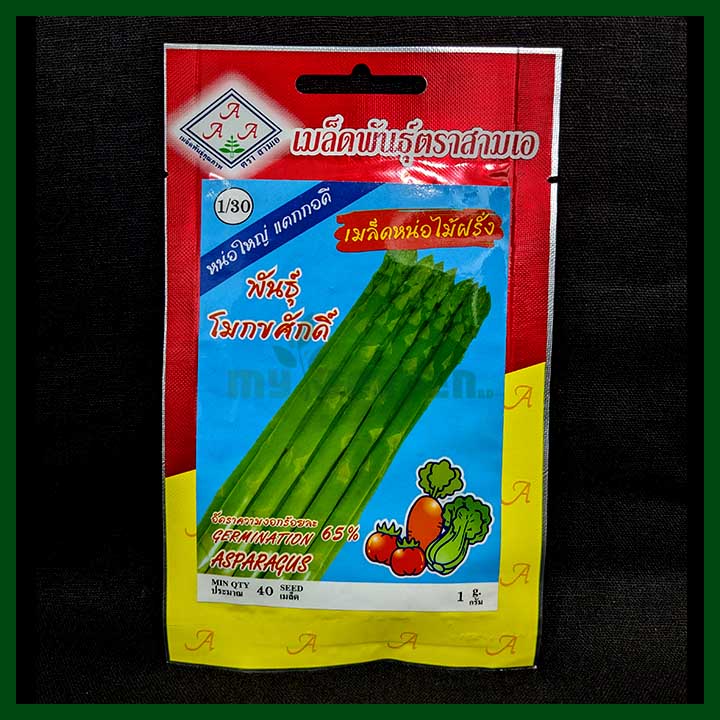
Asparagus – 40 Seeds – AAA – Thai
৳ 160.00
Description
Asparagus
Quantity: 40 Seeds
Brand: AAA
Country: Thailand
Germination Rate (Approx.): 65%
Physical Purity (Min): 98%
Genetic Purity (Min): 98%
Germination Temperature:
-
Optimal soil/cold frame temp: 21–29 °C (70–85 °F) for seeds.
-
Some guides report viable germination at 15–27 °C.
Germination Time:
-
Typically 10–28 days with good conditions.
-
Can take up to 6–8 weeks in cooler conditions.
Plant Size & Spacing
Plant Height / Span:
-
Mature plants can reach 1.0–1.5 m tall (3–5 ft) and spread similarly.
Seed Sowing Depth:
-
Sow seeds ~1/2 inch (~1.3 cm) deep in trays/soil.
Plant Spacing:
-
About 12–18 inches (30–45 cm) between plants.
Row Spacing:
-
Roughly 4–5 ft (1.2–1.5 m) between rows.
Support/Trellis:
-
Not required — asparagus grows upright and does not vine. (No trellis)
Plant Development Timeline
Seed to Harvest:
-
Asparagus is a slow perennial.
-
If grown from seed, expect ~2–3 years before harvestable yields.
-
Crown planting yields earlier harvests (often in year 2–3).
Seed to Bloom:
-
Plants may flower typically after 2–3 years, after initial establishment. (Perennial growth)
Growing Conditions
Pot/Container/Bed Size:
-
For containers: at least a 12–18 inch deep / wide pot per plant for healthy roots.
Asparagus has a deep root system — larger = better; 18 inches (45 cm) depth recommended.
Soil Type & pH:
-
Well-drained sandy loam or loamy soil with high organic matter.
-
Ideal soil pH: 6.0–7.0 (neutral to slightly acidic).
Light & Water
Sunlight:
-
6–8 hours full sun daily.
Light for Germination:
-
Seeds benefit from consistent warmth and surface light; shallow planting helps.
Water Requirements:
-
Young asparagus needs even moisture (avoid waterlogging).
-
Around 1–2 inches (2.5–5 cm) water per week during growth season.
Nutrients & Fertilizer
Essential Nutrients:
-
Nitrogen (N), Phosphorus (P), Potassium (K) — like most vegetables, plus good organic matter.
-
Asparagus roots are deep; adequate P helps roots, K assists overall growth.
Organic Sources:
-
Nutrient balancing can include compost, vermicompost, well-rotted manure, bone meal (P), and Epsom salt (Mg).
(Percentages vary by ingredient nutrient analysis; see blended mix below.)
Chemical Fertilizer:
-
Commercial guidance suggests balanced NPK (10-10-10) applied before planting and after harvest in established beds.
Potting Mix for Rooftop (Bangladesh Climate)
Note: This is a general recommended blend for perennial, deep-rooted plants. Adjust slightly with soil tests.
-
Loamy soil – 35% (base structure & drainage)
-
Vermicompost – 20% (organic fertility & microbes)
-
Cow dung compost – 15% (nitrogen release)
-
Bone meal – 5% (slow-release P)
-
Horn meal – 5% (slow-release N)
-
Oyster shell powder – 5% (calcium + pH buffer)
-
Epsom salt – 1% (magnesium for green growth)
-
Brown river sand – 14% (improve drainage)
This blend emphasizes drainage, nutrient availability and long-term perennial support.
Companion Plants
Good companions:
-
Tomatoes, parsley, basil — help deter pests.
-
Avoid heavy feeders near asparagus. (General companion suggestions, not Bangladesh specific.)
Taste Ratings
Fruit:
-
Asparagus does not produce a typical fruit eaten in cuisine. (Flower produces berries but not eaten.)
Spears/Young Shoots:
-
Edible stem taste: rated average around 7/10 — mild, slightly sweet, delicate flavor.
Pests & Diseases
Common Pests:
-
Asparagus beetles, cutworms, aphids.
-
Chemical controls often include pyrethroids/permethrin, carbaryl, spinetoram (check local regs).
-
Organic control: hand-picking, neem oil sprays, beneficial insects.
Diseases:
-
Asparagus rust (Puccinia asparagi), crown rot, purple spot.
-
Chemical fungicides exist; organic disease mgmt emphasizes good drainage, crop sanitation, resistant varieties.
Harvest Identification
Harvest when spears are 6–8 inches tall and firm with tight tips.
Yield Estimates
Monthly Yield for Family:
-
Asparagus harvest is seasonal (spring), not year-round. A family might grow 5–10 plants to provide regular harvests during peak season.
Average Yield:
-
Mature stands (~perennial bed) produce ~0.5–1 lb per plant per season (varies widely by conditions).
Plant Lifespan
Asparagus can produce for 15–20+ years once established.
Nutrition & Health Benefits
Key Nutrition (per cooked spears):
-
Vitamins A, C, K, folate, fiber, potassium, antioxidants.
FHealth Benefits:
-
Antioxidant protection.
-
Digestive health via fiber.
-
Supports heart health (potassium).
-
Low calorie, aids weight-control.
-
Contains folate supporting cell growth, pregnancy nutrition.
Popular Recipes
Bangladeshi Style:
-
Stir-fried asparagus with garlic, chilli and soy.
-
Asparagus & egg bhurji.
Other:
-
Asparagus risotto.
-
Roasted asparagus with lemon & parmesan.
(Traditional Bangladesh recipes adapted; asparagus is not a traditional Bangladeshi staple but works well.)
Best Month in Bangladesh for Germination
Given Bangladesh’s climate warm tropics, sow seeds when soil temps are consistently ~20–30°C — typically December to February for greenhouse/seedbeds before monsoon heat (regionally estimated).
Seeds per Gram
Asparagus seeds are relatively large; textbooks report ~ 2,000–3,000 seeds per 100 g (roughly 20–30 seeds per gram).
Best Propagation Method
Best method for home/garden success: plant 1-year crowns rather than direct seed, as seedlings take longer to establish.
Storage Methods
Spears:
-
Refrigerate untrimmed in moist bag ~5–7 days.
-
Freeze after blanching for months.
Fern/Leaves:
-
Not commonly eaten; can be dried for compost or mulch.
Specialties
-
Long-lasting perennial crop (15+ yrs)
-
Nutrient-dense and low calorie.
-
Deep root system stores energy for early harvest.
Quotes on Asparagus
-
“Asparagus: a perennial treasure that grows stronger with patience.”
-
“Green spears of nature’s quiet persistence.”
Unknown Facts
-
Asparagus was eaten by ancient Egyptians and Romans.
-
Young spears actually have tiny scale-like leaves (not true leaves).
-
Some people can’t smell the distinctive urine odor after eating asparagus — a genetic trait.
Scientific Classification
Scientific Name: Asparagus officinalis
Family: Asparagaceae
Reference 1:
Reference 2:
How Does it Grow?
Disclaimer: In accordance with the universal custom of seed trade we give no warranty expressed or implied as to description, quality, productivity or any other matter of any way for the crop results beyond the purchased price especially under unsuitable season, abnormal weather, unsuitable soil and other unexpected conditions.
বীজ ব্যবসার সার্বজনীন প্রথা অনুযায়ী আমরা বিশেষত অনুপযুক্ত ঋতুতে, বিশেষত অনিয়মিত আবহাওয়া, অনুপযুক্ত মাটি এবং অন্যান্য ক্রয়মূল্যের বাইরে ফসলের ফলনের বর্ণনা, গুণমান, উৎপাদনশীলতা বা অন্য যে কোনও বিষয়ে বর্ণিত ওয়ারেন্টি প্রদান করি না। অপ্রত্যাশিত শর্ত।
#How #to #does #it #grow #Asparagus #plant #from #seed #বীজ #seeds #store #shop #online #near #me #in #quality #Rooftop #Garden #gardening #green #planet #growing #organic #vegetable #home #uses #recipe #soil #annual #perennial #winter #Dhaka #Bangladesh #AsparagusOfficinalis #VegetableGardening #PerennialVeg #HomeGarden #OrganicFarming #অ্যাসপ্যারাগাস #সবজি #বাগান #পেরেনিয়াল #কৃষি
Only logged in customers who have purchased this product may leave a review.


Reviews
There are no reviews yet.